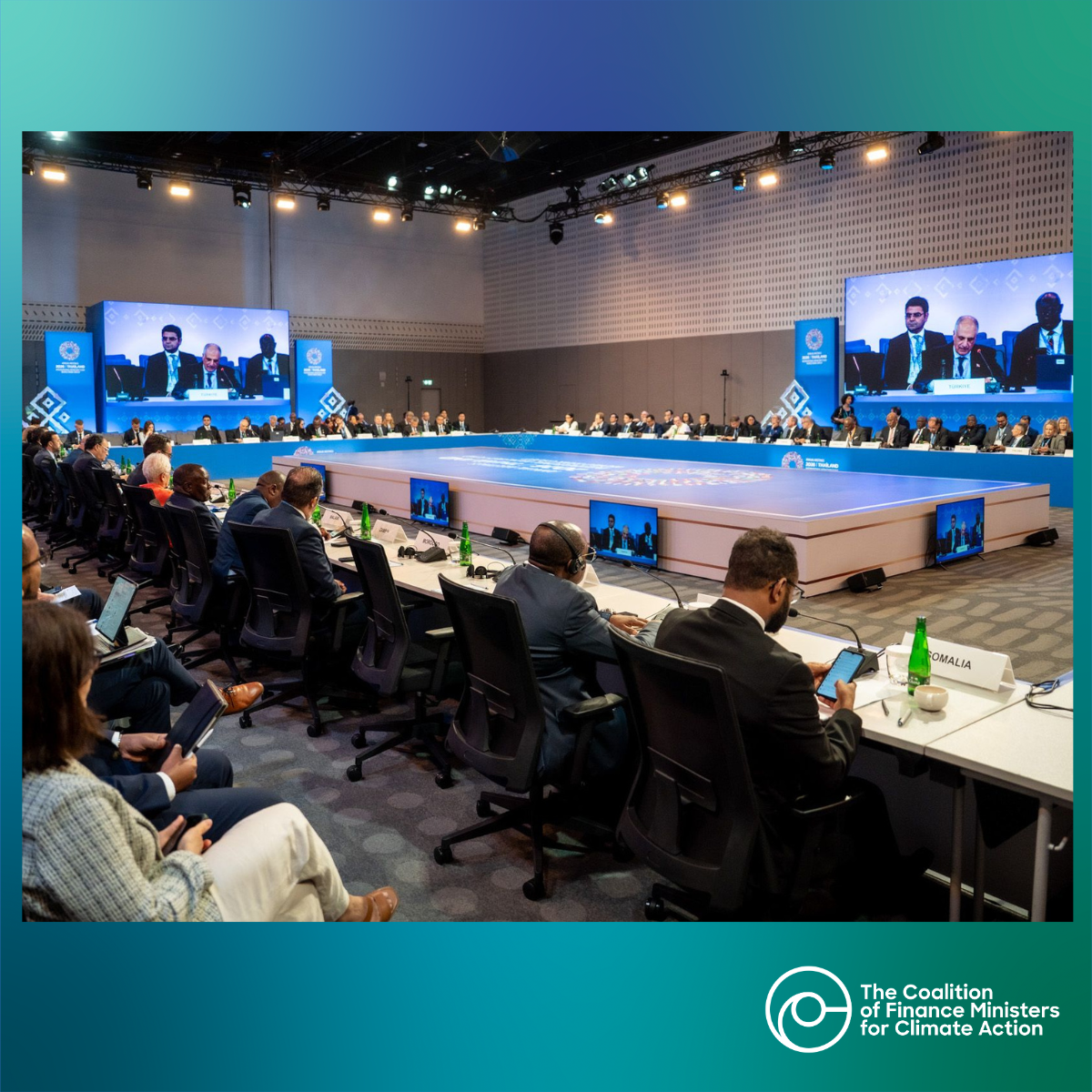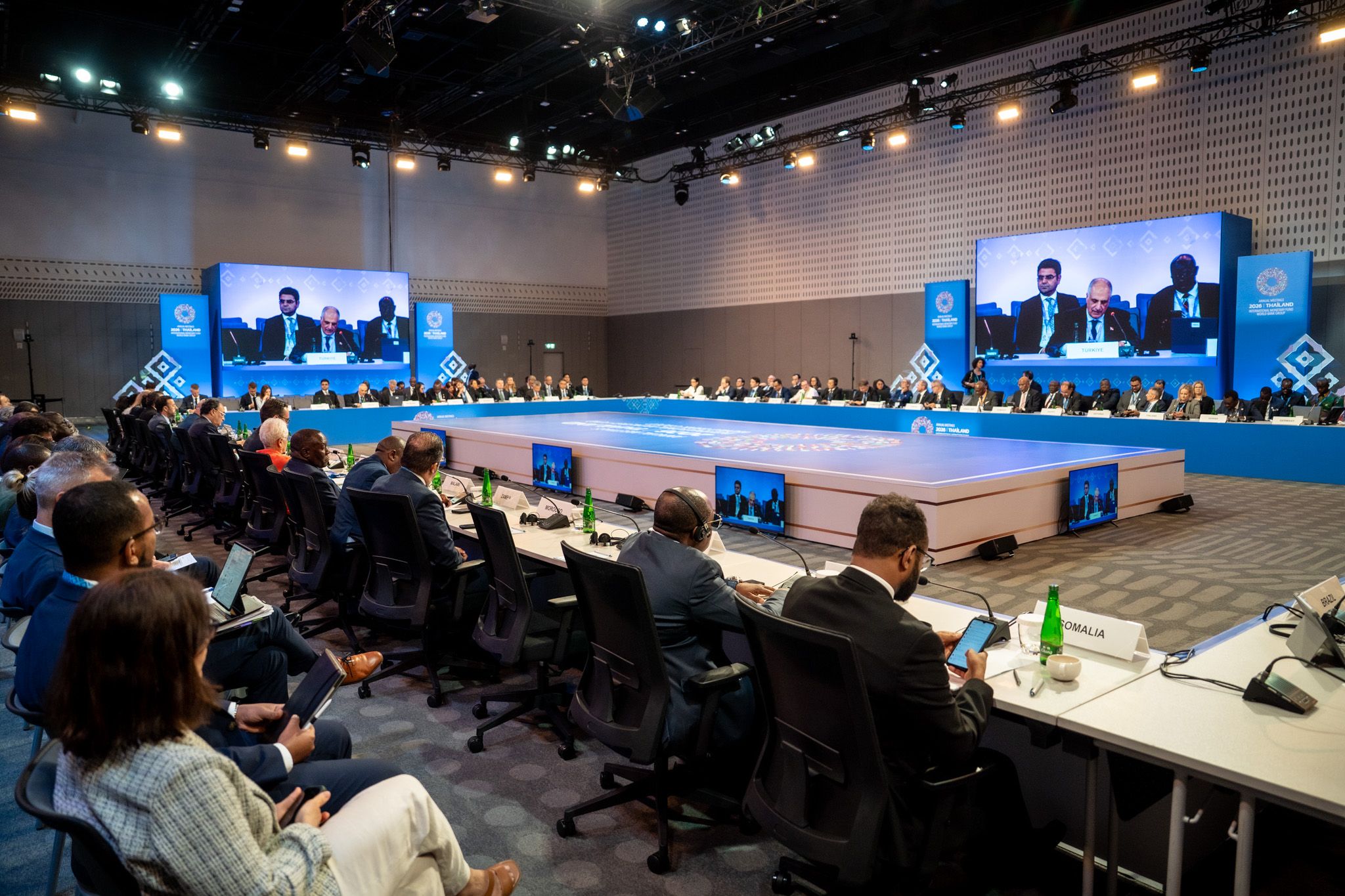
















Europe Meeting Agenda 1-3 December 2025
Agenda – Europe Regional Meeting
1-3 December 2025
- Read more about Europe Meeting Agenda 1-3 December 2025
- Log in or register to post comments
The Coalition is dedicated to providing insightful news updates on global efforts and progress in achieving climate action goals
New global initiative to deepen knowledge exchange between central banks and finance ministries to manage climate risks.
The Network for Greening the Financial System (NGFS) and the Coalition of Finance Ministers for Climate Action (CFMCA) have launched a new joint dialogue platform to deepen knowledge sharing between central banks and finance ministries on the macroeconomic dimensions of climate change and the transition to a low-carbon economy.
How Ministries of Finance Can Build Capabilities for Economic Analysis and Modeling to Drive Green and Resilient Transitions - October 2025
Economic Analysis and Modeling Tools to Assist Ministries of Finance in Driving Green and Resilient Transitions - November 2025
Climate Action Statement 2025 and Climate Action Map
Over 500 climate policies by finance ministries worldwide show the economic benefits of climate action. The latest edition of the Climate Action Statement, featuring data from nearly 70 countries, demonstrates that finance ministries are driving economic growth, competitiveness, and resilience through their climate ambitions.
Finance Ministers hold the keys to accelerating climate action. They are most clearly aware of the risks posed by climate change and recognize how taking action could unlock trillions in investments and create millions of jobs by 2030.
The Coalition of Finance Ministers for Climate Action brings together fiscal and economic policymakers from 100 countries to lead the global climate response and secure a just transition towards low-carbon, resilient development.
Learn MoreThe six Helsinki Principles guide the Coalition's commitment to #ClimateAction
View recent and upcoming Coalition events, including workshops, webinars and meetings
Brazil’s Ecological Transformation Plan (ETP) outlines a strategy to align climate objectives with social and economic development, aiming to support the country’s transition toward a low-carbon economy.
By Raquel Nadal, Ministry of Finance, Brazil.
Brazil’s energy profile provides a strong basis for decarbonization: 92% of electricity generation comes from renewable sources (a global average of 27%), and biofuels account for 21% of transportation fuels (a global average of 4%). Additionally, Brazil has ample land suitable for renewable energy expansion and reserves of critical minerals, including nickel, rare earths, and uranium. These factors create opportunities, but they do not eliminate the complexity of the required transition ahead.
Recognizing these challenges, the Brazilian government launched the Ecological Transformation Plan(ETP) as a comprehensive framework to decarbonize the economy, improve productivity, and reduce regional and social inequalities. With many Brazilians still living in poverty, the plan aims to integrate climate action with inclusive and equitable development.
The ETP is organized around six strategic pillars, each with a specific policy agenda:
1- Sustainable finance: This pillar focuses on redirecting capital flows toward sustainable investments. Initiatives include a green taxonomy and Eco-Invest, a mechanism designed to attract private capital for long-term green projects. Eco-Invest also offers currency hedge facilities to reduce risks for international investors. The goal is to create financial conditions that make sustainability-oriented projects more viable.
2- Technological modernization: This pillar aims to modernize industrial processes and promote low-carbon technologies. The objective is to enhance productivity and competitiveness, enabling Brazilian industries to participate in global low-carbon value chains.
3- Bioeconomy and agro-food systems: Land use and agriculture account for over 70% of Brazil’s greenhouse gas emissions, making this sector central to a low-carbon economy. Policies focus on restoring degraded pasturelands, reducing deforestation, and enhancing the value of forest-based products. The aim is to turn the sector into a source of climate solutions while supporting biodiversity and rural livelihoods.
4- Energy transition: This pillar seeks to accelerate renewable energy deployment and expand electrification in transport.
5- Circular economy: The focus here is on improving resource efficiency through recycling and reuse, reducing demand for raw materials, lowering emissions, and creating new business opportunities.
6- Green infrastructure and adaptation: This pillar promotes climate-resilient infrastructure, linking investments in areas such as urban mobility and flood protection with job creation and improved quality of life.
Expected Outcomes and Associated Risks
Two studies — one conducted with the World Bank using a dynamic stochastic model and another led by UNEP’s Partnership for Action on Green Economy using an input-output model — estimate that full implementation of the ETP could:
· Increase Brazil’s potential GDP by up to 1 percentage point by 2050
· Create 2.3 million new jobs
· Boost per capita income and investment
· Reduce inequality
· All while meeting the net-zero emissions target.
These projections, however, depend on effective implementation and risk management. Brazil must navigate several critical risks:
· Agricultural emissions and deforestation: Stronger and more inclusive growth could increase demand for agricultural products, raising emissions and deforestation risks. Productivity improvements and regulatory enforcement will be critical.
· Labor market adjustments: Skills may not match demand, and some sectors — such as oil and automotive — could lose jobs. Policies for training, mobility, and regional development will be needed to mitigate these impacts.
· Fiscal constraints: While revenues from carbon markets and selective green taxes may emerge, Brazil’s fiscal framework limits public spending to stabilize debt and control inflation. This could restrict public investment unless innovative financing solutions are adopted.
· Climate shocks: Extreme weather events, such as floods and droughts, have already affected crops and livestock, contributing to food inflation and monetary tightening. These shocks can increase financing costs and slow progress.
· Political continuity: If mandates are unclear or the costs of inaction are not well communicated, key initiatives — such as the green taxonomy and carbon market — could face discontinuity. Broad-based support and institutional stability will be essential.
The Ecological Transformation Plan represents an effort to integrate climate policy with economic and social priorities. Its success will depend on careful coordination, robust planning, and sustained political commitment. A transition to a low-carbon economy presents opportunities for growth and inclusion, but it also entails significant trade-offs and risks that necessitate proactive management.
Read the Executive Summary of the MODELING THE IMPACTS OF BRAZIL’S ECOLOGICAL TRANSFORMATION PLAN.
Watch the YouTube video about the Ecological Transformation Plan.
Agenda – Europe Regional Meeting
1-3 December 2025
At COP30 in Belém, ministers of finance and global partners took a decisive step to strengthen country leadership in mobilizing climate and development finance. 13 countries and one regional coalition announced new country platforms under the Green Climate Fund’s readiness programme—creating integrated investment frameworks that translate national climate strategies into bankable pipelines. The Coalition of Finance Ministers' workstream HP1 and HP6 is advancing peer exchange on country platforms.

Key innovation:
The Country Platform Hub (CP Hub) was launched as part of COP30’s Solutions Acceleration Plan. The Hub is designed to:
The CP Hub builds on partnerships with GCF, NDC Partnership, CVF–V20, Finance in Common, UNDP, and others, and will be guided by a Steering Committee with a majority of developing-country representatives. Initial seed funding of USD 4 million will support governance, knowledge systems, and a Spark Plug window for early-stage platform design.
By anchoring coordination in ministerial networks—including the Coalition of Finance Ministers for Climate Action—the Hub strengthens the financial and institutional architecture needed to operationalize the Baku-to-Belém Roadmap and accelerate capital flows aligned with national priorities.
Why it matters:
Country platforms are emerging as a critical instrument to align public and private finance with long-term climate strategies, reduce transaction costs, and crowd in investment at scale.
Read the Coalition Blog on Country Platforms
Read more about the Coalition's High Level Events.
Read more about the Coalition's participation in the COP30 Side Events.
Read more about the NFGS and the Coalition's joint initiative.
Read more about the launch of the country Platforms Hub.
Access the Coalition's tools to navigate the key topics of COP 30.
Ahmed Kouchouk, Minister of Finance, Egypt, Juan Labat, Environmental Affairs Coordinator, Ministry of Finance, Uruguay and Ani Dasgupta, CEO of the World Resources Institute (WRI), shared powerful video messages at COP30.
Their remarks underscored the urgency of climate action, highlighted the critical role of the Coalition of Finance Ministers in driving finance and policy alignment, and showcased their countries' and institutions’ efforts to accelerate implementation.
These messages reaffirm the importance of collaboration between ministries of finance and environment, and the need for innovative solutions to deliver on NDCs and scale up climate finance globally.
Read more about the Coalition's participation in the COP30 Side Events.
Read more about the NFGS and the Coalition's joint initiative.
Read more about the launch of the country Platforms Hub.
Access the Coalition's tools to navigate the key topics of COP 30.
Launch of the Country Platform Hub at COP30: Advancing Financial Architecture for Climate and Development
At COP30 in Belém, ministers of finance and global partners took a decisive step to strengthen country leadership in mobilizing climate and development finance. 13 countries and one regional coalition announced new country platforms under the Green Climate Fund’s readiness programme—creating integrated investment frameworks that translate national climate strategies into bankable pipelines. The Coalition of Finance Ministers' workstream HP1 and HP6 is advancing peer exchange on country platforms.

Key innovation:
The Country Platform Hub (CP Hub) was launched as part of COP30’s Solutions Acceleration Plan. The Hub is designed to:
The CP Hub builds on partnerships with GCF, NDC Partnership, CVF–V20, Finance in Common, UNDP, and others, and will be guided by a Steering Committee with a majority of developing-country representatives. Initial seed funding of USD 4 million will support governance, knowledge systems, and a Spark Plug window for early-stage platform design.
By anchoring coordination in ministerial networks—including the Coalition of Finance Ministers for Climate Action—the Hub strengthens the financial and institutional architecture needed to operationalize the Baku-to-Belém Roadmap and accelerate capital flows aligned with national priorities.
Why it matters:
Country platforms are emerging as a critical instrument to align public and private finance with long-term climate strategies, reduce transaction costs, and crowd in investment at scale.
Read the Coalition Blog on Country Platforms
The Coalition of Finance Ministers at the Forefront of Climate Action
Beyond the main stage, the Coalition of Finance Ministers for Climate Action leveraged COP30 side events to deepen collaboration and spotlight practical solutions for climate implementation. These sessions explored cutting-edge themes—from taxonomy interoperability and adaptation finance to integrating climate risks into debt sustainability analysis. Highlights included dialogues on the Baku-to-Belém Roadmap, the Circle of Finance Ministers report, and the Independent High-Level Expert Group’s recommendations, all reinforcing the Coalition’s commitment to mobilizing private capital and aligning fiscal frameworks with climate goals. By convening finance leaders, institutional partners, and technical experts, these side events advanced actionable strategies to scale investment and accelerate a just, resilient transition. Key Highlights Include: 1) High Level Event "Implementing the COP30 Circle of Finance Ministers Report and the Baku to Belém Roadmap to 1.3T: Recommendations and Pathways to Deliver The event focused on implementing the Circle of Finance Ministers Report and the Baku-to-Belém Roadmap (B2BRM), aiming to mobilize USD 1.3 trillion annually by 2035 for climate action. Key Takeaways:
During the event, the Coalition of Finance Ministers for Climate Action reaffirmed its leadership in integrating climate into economic and fiscal policy.
Priority 3: Domestic actions within finance ministries’ remit.
2) Baku-to-Belém Roadmap (B2BRM) Event The roadmap consolidates 227 submissions, including 38 from Party groups, into a practical guide to mobilize USD 1.3 trillion annually by 2035. Key Highlights:
Next Steps:
The roadmap signals a shift from vision to delivery, calling for better, more predictable, and accessible finance. As COP30 CEO Ana Toni noted: “Time to act is now. There is no lack of finance, but we must redirect resources at the scale and speed the climate challenge demands.” 3) Roundtable on the Fourth Report of the IHLEG on Climate Finance: Delivering an integrated climate finance agenda in support of the Baku to Belém Roadmap to 1.3T At COP30, the IHLEG presented its fourth finance report, a key companion to the Circle of Finance Ministers Report and the Baku-to-Belém Roadmap. The report provides a detailed analysis of how to mobilize USD 1.3 trillion annually by 2035, focusing on innovative and diversified sources of external finance. Key Insights:
UNFCCC’s Executive Secretary Simon Stiell highlighted the report as a practical tool to inform decision-makers and signal solutions beyond the COP process. Experts stressed that climate and development finance must go hand in hand, with adaptation, resilience, and nature-based solutions as priorities. The IHLEG report reinforces that while there is no single solution, coordinated action across governments, MDBs, the private sector, and coalitions like the Coalition of Finance Ministers for Climate Action can make the ambitious financing goals achievable. 4) Advancing NDC Finance for Implementation Across Arab States The high-level side event brought together ministries of finance and environment from the global South and global North, serving as a space to present the findings of a forthcoming report that stocktakes progress in the region on climate finance and fiscal policy alignment. It examined the role ministries of finance need to play as partners to ministries of environment and planning in delivering on NDCs in the region. The event also provided an opportunity for practitioners and decision-makers to exchange good practices and explored how regional institutions and initiatives could help scale up climate finance solutions for the Arab States.
5) Taxonomy interoperability to catalyse private capital At COP30, Brazil showcased its recently published sustainable finance taxonomy and announced plans for a “super taxonomy” initiative during its COP Presidency. It aims to establish high-level principles to guide countries in developing interoperable taxonomies, enabling comparability and accelerating capital flows from North to South. With 69 national or regional taxonomies in place or under development, harmonization is essential to direct the $2.4 trillion needed for climate action and support emerging markets. Taxonomies provide a common language for investors and policymakers, reducing uncertainty and boosting cross-border sustainable investment. Experts stressed science-based principles, early international dialogue, and inclusion of adaptation and resilience in taxonomies. Calls for usability and insurance integration highlighted the need for practical tools alongside global standards. Key Highlights: Brazil’s Leadership: Proposed a roadmap for taxonomy harmonization, building on G20 principles and supported by UNEP and Climate Bonds Initiative. Emphasized taxonomy comparability as critical for implementing the Baku-to-Belém Roadmap. Global Action on Interoperability: IFC and partners launched four deliverables
Partnership includes IPSF, UNDP, GIZ, EU Sustainable Finance Group, BMZ, and others.
6) UNFCCC Side Event on Adaptation Finance – Addressing urgent needs for resilience and adaptation funding in vulnerable economies
|
|
7) “Novel Approaches to Transition Away from Fossil Fuels, from “what” to “how”” - ministers and climate leaders convened for a high-level dialogue urging the dismantling of regressive fossil fuel subsidies. Speakers highlighted that eliminating these subsidies is critical to meeting climate targets and freeing fiscal space for climate investments, particularly in emerging economies. The discussion underscored the need for transparency, equitable transitions, and stronger international cooperation to accelerate the shift from fossil fuels to clean energy.
|
Read more about the Coalition's participation in the COP30 Side Events.
Read more about the NFGS and the Coalition's joint initiative.
Read more about the launch of the country Platforms Hub.
Access the Coalition's tools to navigate the key topics of COP 30.
At COP30, the Coalition of Finance Ministers for Climate Action showcased how finance ministries are driving the shift from climate pledges to implementation.Through high-level events and strategic dialogues, the Coalition emphasized the critical role of fiscal and economic policy in delivering Nationally Determined Contributions (NDCs), mobilizing $1.3 trillion annually for emerging markets, and integrating climate goals into macroeconomic and fiscal frameworks. Key discussions spotlighted innovative tools—such as green budgeting, carbon pricing, and risk management—and launched new initiatives to strengthen collaboration between finance ministries and central banks. These engagements reaffirm the Coalition’s commitment to enabling resilient and inclusive growth, and positioning finance ministries as leaders in the global climate transition.
Watch the video summary:
The role of finance ministries in driving climate implementation and investment is gaining unprecedented attention. Recent important reports, including the COP30 Circle of Finance Ministers report and the Baku-to-Belém Roadmap, as well as the newly released Independent High-Level Expert Group (IHLEG) report on Climate Finance, all converge on one message: finance ministries are central to delivering climate commitments and enabling a just transition.
The role of finance ministries in implementing climate action reflects a fundamental shift in the global policy architecture. This is not limited to macro-fiscal management; it also encompasses the design of financial systems, the mobilization of private capital on a large scale, and the creation of enabling environments for sustainable economic growth. Adaptation finance, integration of climate risk into fiscal frameworks, and deployment of technology-driven solutions, including AI for modeling and analytics, are emerging as core priorities for the decade ahead.
The Coalition of Finance Ministers for Climate Action is well-positioned to help shape this transformation. Through structured dialogues, joint initiatives, and technical platforms, the Coalition supports its 100 member ministries in translating global commitments into actionable strategies. Our workstreams, focused on adaptation, NDC implementation, carbon pricing, climate finance, and mainstreaming climate considerations into economic policies, align directly with the priorities set out in the COP30 Circle Report, the Baku-to-Belém Roadmap, and the IHLEG Finance Report. By advancing taxonomy interoperability, enhancing capacity for climate-informed fiscal planning, and fostering mechanisms to attract private investment, the Coalition ensures that Finance Ministries are equipped to lead systemic change.

High-Level Event: "Implementing NDCs: How Finance Ministries Can Integrate Climate Goals into Economic Strategy" The Coalition's flagship event with Brazil’s Finance Ministry and the COP30 Presidency highlighted the pivotal role of Finance Ministries in delivering NDCs. The discussion underscored the growing importance of Finance Ministries in driving and accelerating climate action, with broad agreement that effective National Determined Contributions (NDCs) implementation hinges on strong macro-fiscal leadership.
Overall, the event confirmed that climate policy is now embedded in macroeconomic strategy, with Finance Ministries playing a critical role in turning commitments into investment pipelines, resilient budgets, and economy-wide transitions. Watch the event video and LinkedIn Post |

"Inside the Economic Engine Room: Ministries of Finance and Economic Analysis for Green and Resilient Transitions" At the Danish Pavilion, the Coalition of Finance Ministers for Climate Action hosted an interactive session exploring how finance ministries are embedding climate into fiscal frameworks and budget processes. Participants explored how MoFs—responsible for managing $30 trillion in public capital—are central to shaping a growth story grounded in optimism and resilience. The event highlighted practical solutions, including peer-to-peer learning, innovative modeling approaches, and new resources to support policy design. Professor Lord Nicholas Stern introduced his open-access book "The Growth Story of the 21st Century", underscoring the role of MoFs in unlocking investment through a range of policy instruments—from carbon pricing to fiscal incentives and market reforms. His message: multiple market failures demand multiple tools, and strong analytics are essential for unlocking investment and delivering sustainable growth.. Key highlights:
The Coalition reaffirmed its commitment to help countries strengthen domestic climate action and mobilize resources for the transition. |
This report provides a systematic overview of analytical tools available to ministries of finance to help address the policy climate policy questions they face and integrate climate into their economic analysis. It serves as a reference for ministries of finance and their partners that want to explore how climate-related economic policy can be analyzed and diverse tools can be used to support climate-informed decision-making. It covers 23 tools grouped into four categories, clarifies their use cases, strengths, and limitations, and provides case studies of their deployment. It also maps tools to policy questions to help ministries of finance identify those most relevant to their needs and highlights cross-cutting analytical considerations. Through this overview, the following key messages emerge: (1) Different strategies can be used to integrate climate into analytical tools, (2) no single tool can answer all relevant questions, (3) tools can be linked or used in conjunction for more comprehensive analysis, and (4) continuous learning and development are crucial. |
The HP4 Capabilities Report provides an overview of strategies, options, and recommendations for how ministries of finance can practically enhance their analytical capabilities to drive green and resilient transitions. Among the report’s key messages are:
– Skills: Building analytical capabilities requires ensuring dedicated staffing resources with the right mix of skills for conducting or interpreting modeling and analysis are present in the ministry. – Collaboration: ministries of finance cannot address their capability gaps alone. They may require support from a broader analytical ecosystem, including line ministries and government agencies willing to share models, data, and experience; universities and research institutes with climate expertise; and technical assistance providers and the wider international community, which can help build expertise and improve access to tools and data. – Governance: Clear roles, responsibilities, and institutional structures are crucial for ensuring that climate-related economic modeling and analysis are effectively integrated into the ministry of finance’s decision-making. There is a strong demand for technical assistance providers to ramp up and reform existing offers and training provision to help ministries of finance develop and maintain internal capabilities. This will require working with universities, research institutions, and partners across government. |
|
|
|
Launch of the Coalition of Finance Ministers and NGFS Joint Initiative: On the margins of COP30 in São Paulo, the Coalition of Finance Ministers for Climate Action and the Network for Greening the Financial System (NGFS) announced a new initiative to strengthen collaboration between finance ministries and central banks. The joint initiative aims to deepen cooperation between finance ministries and central banks on the macroeconomic dimensions of climate change and the transition to a low-carbon economy. Climate change and the low-carbon transition are reshaping macroeconomic and financial conditions in ways that directly affect both fiscal and monetary policy environments. In this context, regular and informal exchanges between finance ministries and central banks can support mutual learning, a clearer shared understanding, and well-informed economic planning, while fully respecting their distinct mandates. This initiative will bring together fiscal and monetary officials to share approaches and perspectives on how climate and nature-related developments are influencing macroeconomic conditions, inflation, debt sustainability, financial stability, investment needs, and growth prospects. It is designed to be voluntary, flexible, and non-binding, and grounded in practical experience. |
Read more about the Coalition's participation in the COP30 Side Events.
Read more about the NFGS and the Coalition's joint initiative.
Read more about the launch of the country Platforms Hub.
Access the Coalition's tools to navigate the key topics of COP 30.