





















16th Ministerial Meeting of the Coalition of Finance Ministers for Climate Action

16th Ministerial Meeting of the Coalition of Finance Ministers for Climate Action
Read More

Coalition of Finance Minister events, reports, tools, and highlights 

The Coalition is dedicated to providing insightful news updates on global efforts and progress in country domestic climate action we support


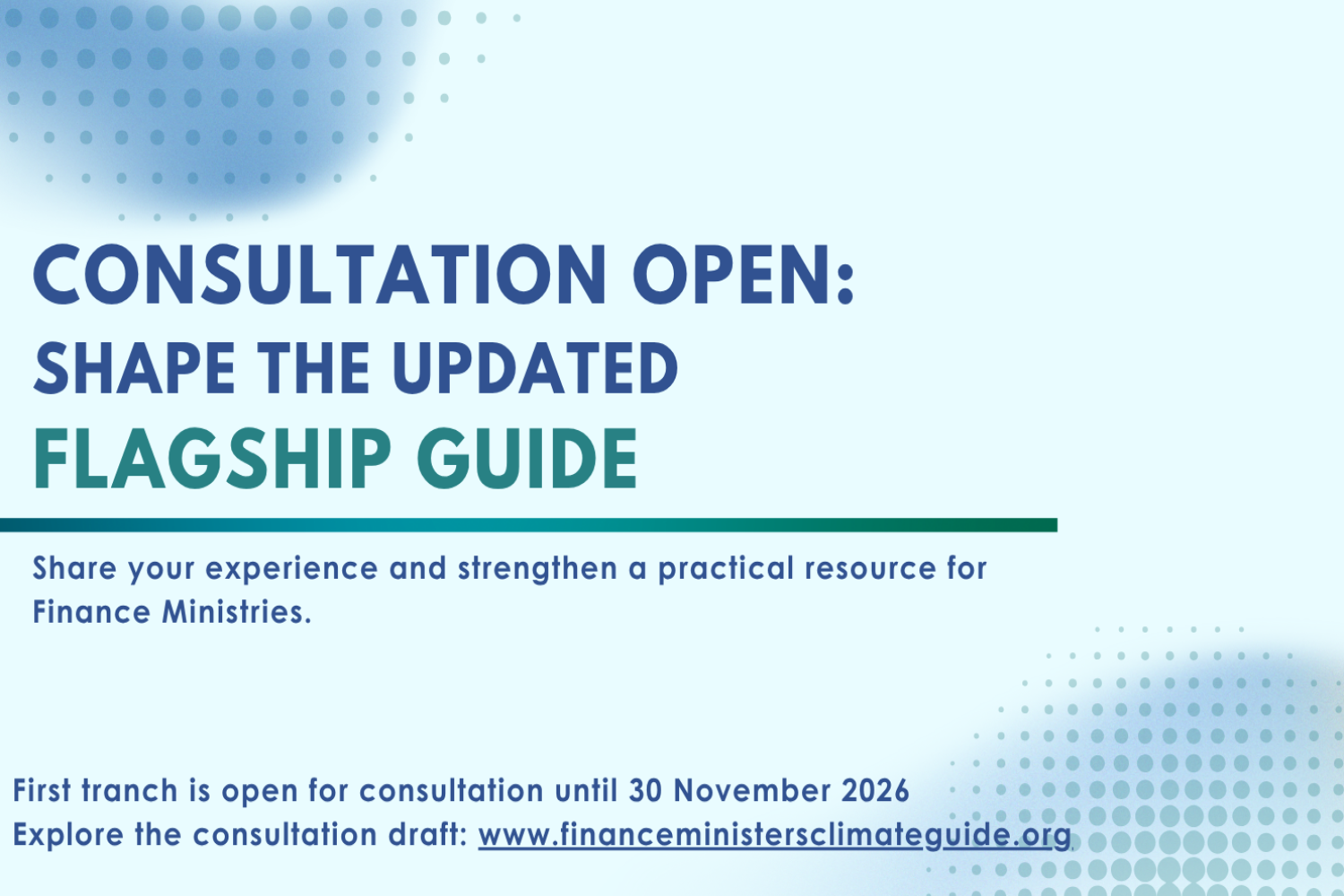
The first Action Areas of the updated Flagship Guide are now open for consultation.

Coalition members and other interested stakeholders are invited to review the drafts and share their feedback, country experience, and implementation lessons to help make the final Guide as practical and useful as possible for Ministries of Finance. 

Contribute through the consultation form

Explore the consultation draft on the interactive website and share your feedback

Read the two-page summary for policymakers.

Consultation until 30 November 2026 


The Network for Greening the Financial System (NGFS) and the Coalition of Finance Ministers for Climate Action (CFMCA) have launched a new joint dialogue platform to deepen knowledge sharing between central banks and finance ministries on the macroeconomic dimensions of climate change and the transition to a low-carbon economy.

Check the previous and upcoming joint events here.


The Coalition’s program in Bangkok brings together ministerial leadership, regional and technical dialogue, and practical exchanges on climate and economic policy and reflects its growing focus on implementation, peer exchange and strengthening the role of Finance Ministries in climate action.
 
Read our main outcomes:

And follow us on LinkedIn for daily updates.


About the Coalition

Finance Ministers hold the keys to accelerating climate action. They are most clearly aware of the risks posed by climate change and recognize how taking action could unlock trillions in investments and create millions of jobs by 2030.

The Coalition of Finance Ministers for Climate Action brings together fiscal and economic policymakers from 100 countries to lead the global climate response and secure a just transition towards low-carbon, resilient development.

104 Member Countries

Member Countries


Securing the Future: How Italy Is Tackling the Insurance Protection Gap

August 10, 2026


By the Italian Ministry of Finance

Italy has introduced a pioneering public–private insurance scheme mandating business coverage for natural catastrophes, aiming to close its 78% protection gap and set a model for international disaster risk finance.

Italy is one of Europe's most hazard-exposed countries, where earthquakes, floods, and landslides pose persistent risks and where the economy relies heavily on small and medium-sized enterprises (SMEs), many of which lack adequate insurance protection. For example, when devastating floods struck Emilia Romagna in 2023, the damage bill reached billions of euros, much of it uninsured. The disaster underscored a growing challenge for Italy and many countries worldwide: natural catastrophes are becoming more frequent and costly, while insurance coverage remains insufficient.

Today, an estimated 78% of potential losses from natural disasters in Italy are uninsured, leaving businesses vulnerable, slowing recovery, and increasing pressure on public finances.

Recognizing the economic and fiscal costs of this protection gap, Italy has introduced an ambitious reform to promote risk prevention and management, reduce fiscal exposure, and encourage public-private cooperation, while improving long-term budget sustainability.

A Landmark Reform

In late 2023, Italy introduced a groundbreaking measure through its 2024 Budget Law. The legislation requires all registered companies operating in Italy, except for agricultural businesses, as well as foreign ones with a permanent establishment in Italy, to insure land, building, plants, machinery, and industrial and commercial equipment for the reconstruction value, and the restoration and replacement costs, against three major natural hazards: earthquakes, floods, and landslides. At the same time, insurers must offer this coverage with risk-based premiums that reflect location, vulnerability, and the prevention measures adopted, to incentivize firms to invest in adaptation and resilience while ensuring that coverage is available across the market. Insurance premiums are updated periodically to reflect the economic conditions and the specific risk of the companies.

Implementation has been phased in gradually. Large companies were the first asked to comply by March 31, 2025, while small and micro enterprises are joining the scheme by December 31, 2025. The gradual rollout reflects the government's objective of expanding protection while allowing businesses and insurers time to adapt.

Although residential property and infrastructure are not yet included, the reform marks a major shift in how disaster risk is shared and managed across the economy.

Sharing Risk Through Public–Private Partnership

At the heart of the initiative is an innovative public–private partnership designed to make catastrophe insurance both viable and sustainable.

SACE, Italy's state-owned export credit agency, plays a central role as a reinsurer of last resort. SACE can cover up to 50% of insurers’ liabilities through a proportional reinsurance model, providing confidence that even large-scale events can be covered without destabilizing the market.

Article content
The public guarantee scheme

This mechanism allows private insurers to underwrite risks that might otherwise be difficult or too costly to absorb. Premiums collected from policyholders finance the scheme in the first instance, while the state provides an additional safeguard in the event of extreme systemic losses, with support of up to €5 billion annually in 2025 and 2026.

The long-term objective is clear: build a mature and resilient insurance market in which private actors progressively assume a greater share of risk, while public support remains available for truly exceptional events.

To balance affordability with market discipline, the legislation also establishes differentiated rules on deductibles, coverage limits, and premium structures, reflecting the diverse circumstances of micro-enterprises, SMEs, and larger firms.

Building Policy on Evidence

The reform is the result of extensive analytical work and collaboration across sectors. The Ministry of Economy and Finance partnered with civil protection authorities, insurers, and industry associations to develop detailed risk assessments, historical loss databases, and forward-looking catastrophe models.

This evidence-based approach helped ensure that the scheme reflects Italy's territorial realities while supporting sound, sustainable pricing.

During its 2024 G7 Presidency, Italy developed a High-Level Framework for Public–Private Insurance Programs Against Natural Hazards. The framework provides practical step-by-step guidance for governments seeking to reduce protection gaps through structured partnerships, involving, in particular, policy makers, insurance regulators, and supervisors - rather than relying exclusively on post-disaster public compensation.

Italy has also advanced this agenda within the G20 Sustainable Finance Working Group, which it co-chaired in 2025 under South Africa's Presidency. Discussions focus on how insurance solutions can strengthen resilience not only in advanced economies but also in emerging and developing countries, where exposure to climate-related risks is rising while fiscal resources remain constrained. This work culminated in the development of a set of recommendations to scale up adaptation investment and reduce insurance protection gaps, framing insurance protection as part of broader, multi-layered disaster risk finance strategies, in which different tools address different layers of risk depending on their frequency and severity.

At the European level, Italy is contributing to a new dialogue on disaster risk financing and insurance innovation, helping shape approaches that combine resilience, affordability, and fiscal sustainability.

A Blueprint for the Future?

Italy's experience highlights a fundamental question facing policymakers worldwide: how can governments mobilize private capital to strengthen resilience while ensuring that essential protection remains affordable?

The answer increasingly lies in multi-stakeholder partnerships. Mandatory coverage expands participation and creates more predictable recovery mechanisms, while public support helps absorb catastrophic tail risks that markets alone may struggle to manage.

Challenges remain. Some observers argue that households should eventually be included, while others point to emerging climate threats such as droughts, heatwaves, and severe storms that fall outside the current scope.

As climate and disaster risks continue to escalate, countries around the world will need innovative ways to protect citizens, businesses, and public finances. Italy's model, combining mandatory coverage, public reinsurance, and a phased implementation strategy, offers one possible path forward.

In taking decisive action to close its protection gap, Italy has done more than strengthen its own resilience. It has demonstrated how insurance can become a powerful tool for climate adaptation, fiscal stability, and long-term economic security.

Türkiye’s National Green Finance Strategy and Action Plan: Building a Framework for Sustainable Growth

July 09, 2026

haha

By the Turkish Ministry of Treasury and Finance

Türkiye is finalizing its National Green Finance Strategy and Action Plan, led by the Ministry of Treasury and Finance, to establish a transparent and inclusive green finance ecosystem. This initiative aims to align financial flows with its 2053 net-zero target, fostering sustainable economic growth, and contributing to global climate action.

Türkiye is navigating a critical phase of its climate and economic transformation, confronting the dual imperative of sustaining economic growth while mitigating emissions and aligning with global climate commitments. As a nation highly susceptible to climate change impacts within the Mediterranean basin, Türkiye's strategic response carries significant implications for its long-term economic stability and development. The forthcoming National Green Finance Strategy and Action Plan, currently under preparation, represents a cornerstone of this effort. It aims to cultivate a transparent, inclusive, and robust green finance ecosystem that supports Türkiye’s 2053 net-zero target and positions the country as a regional leader in sustainable finance. This initiative provides valuable insights for other emerging economies seeking to integrate climate objectives into their economic frameworks.

This comprehensive strategy is being spearheaded by the Ministry of Treasury and Finance, demonstrating a high-level institutional commitment to embedding climate objectives within the national fiscal and financial architecture. This strategic priority was subsequently enshrined within the 12th Development Plan (2024–2028) and the Medium-Term Program, explicitly mandating the preparation of the green finance strategy as a key action item. This multi-stakeholder dialogue, involving regulatory authorities, line ministries, and private sector actors, underscores a collective national effort to build a resilient and sustainable financial system.

Over the past two decades, Türkiye has adopted a balanced approach to climate action, integrating economic, social, and environmental priorities. This has manifested in significant investments in renewable energy, which has contributed to emissions reduction and reduced external energy dependency. Türkiye's climate policy framework has shown steady evolution since the early 2000s, with climate considerations first appearing in the 8th Development Plan, followed by the ratification of international agreements like the Paris Agreement, the implementation of green action plans, and the recent adoption of a national climate law in 2025. These legislative and policy advancements have established a foundational framework for the National Green Finance Strategy and Action Plan, ensuring financial flows are aligned with overarching climate objectives.

The development of this strategy implicitly recognizes the inherent complexity of integrating climate objectives into a rapidly developing economy. It acknowledges that building a green finance ecosystem is a systemic shift that demands robust legal frameworks, enhanced institutional capacities, and innovative market mechanisms. The multi-stakeholder and holistic approach adopted in its preparation highlights the understanding that no single entity can drive this transformation, requiring sustained dialogues and coordinated efforts across diverse sectors.

Türkiye’s National Green Finance Strategy and Action Plan is anchored by a vision to cultivate a fair and inclusive green finance ecosystem that underpins a sustainable, low-carbon economy. Its core objective is to align financial flows with national and international climate goals, including the ambitious 2053 net-zero target.

The expected outcomes of this strategy are multi-faceted. By aligning financial flows with its 2053 net-zero target, Türkiye anticipates a significant acceleration in low-carbon investments across its economy. This will enhance energy security by further reducing external dependency through renewable energy deployment. The strategy is poised to attract both domestic and international capital by creating a transparent and accountable green finance environment. Ultimately, it aims to foster green growth, ensuring that economic development is sustainable and resilient to climate impacts, while also contributing meaningfully to global climate action.

While the strategy outlines a clear path, its implementation will face inherent risks and trade-offs. A key consideration will be maintaining a balance between economic growth objectives and emissions-reduction efforts, especially amid rising energy demand. The transition costs and distributional impacts across various sectors and regions will need careful management to ensure social inclusion and a balanced approach. In addition, the effective scaling of green finance initiatives will depend on continued policy support and robust monitoring frameworks. Addressing these considerations successfully will be important for sustaining progress toward the strategy’s objectives. If executed effectively, this strategy could provide a useful reference point for how emerging economies may navigate the complexities of climate action while pursuing their development objectives.

Climate Economics in Action: How France Is Turning Policy into Preparedness 

July 16, 2025

By French Ministry of Finance

Subscribe to our Linkedin Blog Series

A balanced policy mix — combining carbon pricing, targeted subsidies, and regulation — offers France a viable path to cutting emissions, protecting debt sustainability, and maintaining public support for the transition. 

Global warming is already a reality for France: average temperatures in mainland France rose by 2.1°C during the 2014-2023 period compared to pre-industrial levels. As global temperatures continue to rise, the economic repercussions of climate change are becoming increasingly evident. France has recognized the urgent need to address these escalating challenges and launched an ecological planning strategy to lead the green transition. The French Treasury took a significant step in 2023 in this regard, creating a new unit dedicated to environmental policy analysis. This aims to strengthen the government's capacity to navigate the complexities of green policymaking.  

The Directorate General of the Treasury (DGT) presented a new report on the economic challenges of France’s net zero transition. Inspired by the UK's landmark Net Zero Review and drawing from international comparisons and the economic literature, the report explores cross-cutting and sectoral dimensions of the transition to net zero. It outlines the key challenges facing businesses, the labor market, foreign trade, households and public finances, addressing the broad macroeconomic impacts as well as sector-specific implications.  

The findings are clear: the road to carbon neutrality involves temporary challenges for economic growth, but they are manageable – and the cost of inaction is far greater. With the right approach, its impact on public finances can be contained. 

Analytical tools to measure the impact of economic shocks and policy reforms 

The report applies two analytical tools to assess the macroeconomic effects of the green transition. The Mesange Vert macroeconomic model, developed in-house, is used to analyze France’s green transition, while the Oxford Economics’ “Global Economic Model” is used to simulate different scenarios for the global energy transition.  At the presentation, particular attention was given to the Mesange model, which highlighted two key economic transmission channels of decarbonization: 

  1. An increase in the relative cost of GHG emissions: the analysis shows that implementing climate policies leads to short-term costs, including a moderate and temporary decline in GDP. However, these effects can be mitigated through redistribution policies, such as recycling carbon revenues as transfers to households or a reduction in employers’ social contributions. 

  1. Additional investment in decarbonization boosts growth: green investments, particularly in energy and infrastructure, boost GDP, even though this positive impact could be limited by financing needs and by the loss of productivity linked to the additional cost of these investments compared to existing carbon-intensive technologies. 


The impact of climate change and transition on public finances  

The Treasury highlights three channels through which climate change affects public finances. These channels can directly impact government revenues and expenditures as well as have an indirect macroeconomic impact. 

  • Fiscal impacts related to mitigation policies, including increased public investment and subsidies to support decarbonization efforts. This covers spending on low carbon energy, energy efficiency programs, reducing tax revenues from fuel and carbon tax revenue. 

  • Fiscal impacts from the physical effects of climate change, such as damage to state-owned assets and the costs associated with compensation or cost-sharing mechanisms. 

  • Fiscal impacts from adaptation policies, which include both reactive and preventive public spending aimed at increasing resilience to climate risks. 


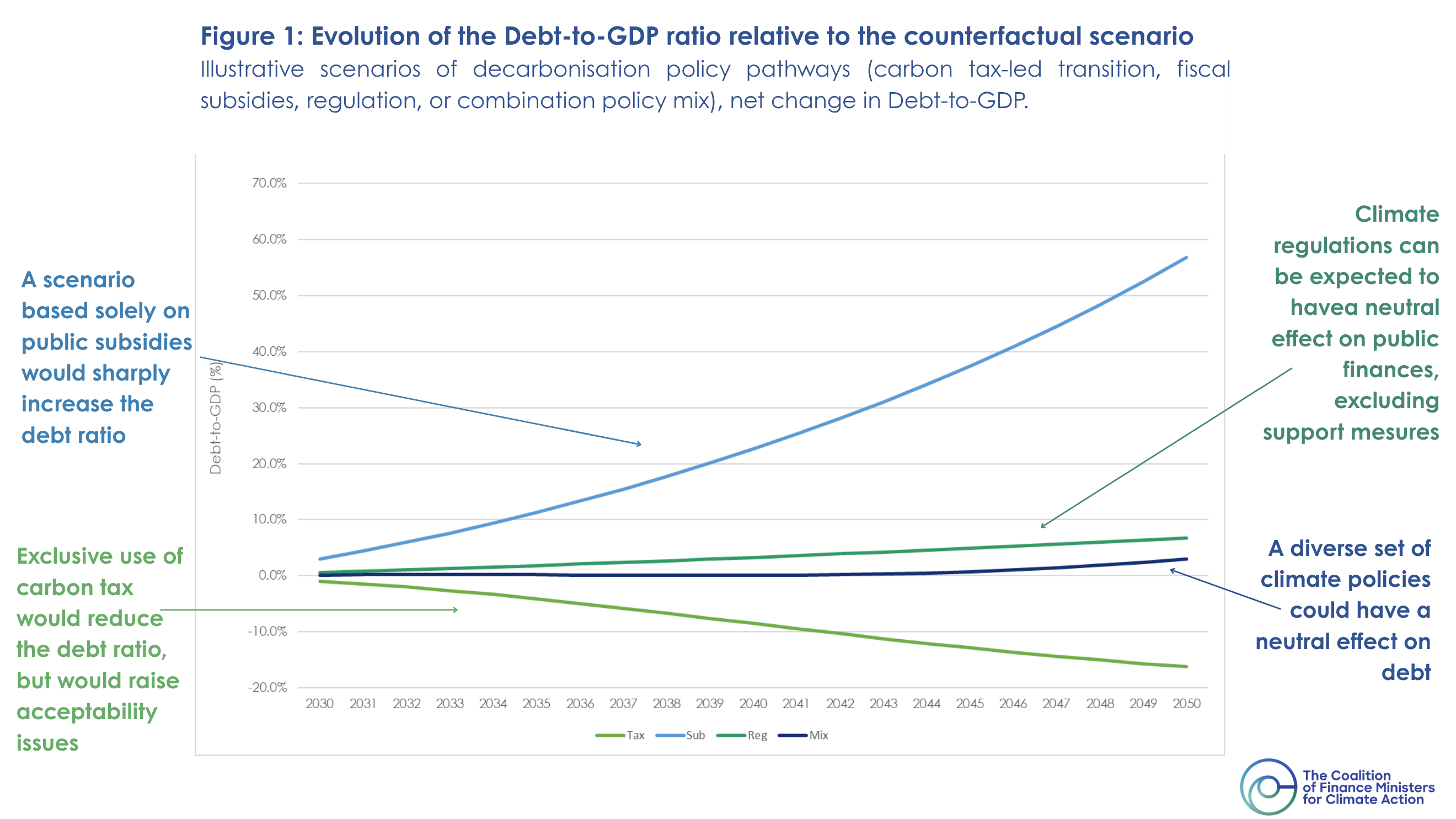
On the specific fiscal implications of mitigation policies, the analysis underscores that the chosen policy mix affects fiscal outcomes. Strategies reliant exclusively on subsidies increase public debt substantially, whereas purely carbon tax–driven approaches would help reduce debt but can face political resistance and lead to adverse redistributive outcomes. A well-balanced mix of carbon pricing, targeted subsidies, and regulatory measures can achieve emission reduction goals while maintaining debt sustainability and ensuring broader public acceptability. This balanced approach also enables the private sector to contribute meaningfully to financing the transition. The figure below illustrates these different results. 

Impact of the net-zero transition on the debt-to-GDP ratio relatively to the counterfactual scenario, by policy scenario 

graph 

A call for strategic, balanced action 

The report conveys a clear message: with a data-driven and balanced policy approach, France can manage the decarbonization costs while minimizing short-term economic disruptions. The climate policy toolkit also includes subsidies for green innovation, regulations to address market failures, and international cooperation to prevent carbon leakage. Together, these efforts can mitigate productivity losses and improve health outcomes through co-benefits of the green transition. 

In this endeavor, the Coalition of Finance Ministers for Climate Action is committed to supporting countries in pursuing resilient and low-carbon development pathways. Through different workstreams and by fostering peer-to-peer learning and knowledge exchange, the Coalition seeks to enhance governments' ability to integrate climate considerations into economic and fiscal policymaking. Read more about the priorities and Strategic Work Program 2025-2026 here. 


Finance Ministries and Country Platforms: a strategic tool to bridge the SDGs implementation gap and scale climate finance?

August 13, 2025

1

By Luma Ramos, PhD, Coalition Secretariat World Bank

Finance ministries, through country platforms, have the potential to mobilize resources on a larger scale and operate projects that support development and climate goals, coordinating fragmented efforts into strategic, investment-ready initiatives that attract private capital, shape markets, and drive long-term impact.

Developing countries are racing to bridge a $4 trillion financing gap to achieve the Sustainable Development Goals (SDGs) by 2030. According to the third report of the Independent High-Level Expert Group on Climate Finance, global climate investment must reach roughly US$6.5 trillion a year by 2030 and US$8 trillion by 2035 to limit the temperature increase to 1.5°C. Amid these challenges, an approach is gaining traction within the international community: country platforms. These nationally led, programmatic coordination mechanisms bring together domestic and international stakeholders, set market signals, and direct investments toward priority sectors and development goals. By coordinating efforts, these mechanisms can increase the overall volume of financing, engage the private sector, and develop pipelines for credible, bankable development and climate projects, rather than leaving investments scattered across fragmented initiatives.

While momentum is building, implementing country platforms is not without challenges. They can be costly, require strong domestic institutional capacity, and robust governance frameworks. They must also address political economic issues and longstanding investment barriers, such as regulatory uncertainty, low prioritization in public support mechanisms, and high perceived risk. At the heart of these efforts stands a key actor: finance ministries.


What Are Country Platforms?

Country platforms are coordination mechanisms that connect intra-government ministries with donors, financial partners, and other stakeholders, while aligning investments with national priorities. Unlike other multi-stakeholder coordination mechanisms, country platforms stand out for their clearly defined goals, policy components, and strong operational focus. They are designed to shape markets and mobilize resources toward targeted areas, with implementation outcomes that are pre-defined, country-owned, and transparent. All stakeholders coordinate according to their specific roles to deliver on these outcomes, while also sharing knowledge and building local capacity. This approach not only ensures accountability and alignment but also supports the sustainability of country-led efforts.

Across existing examples, including the Just Energy Transition Partnerships (JETPs), there is significant variation in the scale and stakeholder composition of investment platforms. Nonetheless, common features emerge they typically involve large-scale financing initiatives focused on similar clusters of industrial sectors, aiming to advance both economic development and climate transformation.

Article content
FDL-C3A Policy Note on Country Platforms, p.4

When effectively designed, country platforms provide clarity on how governments intend to achieve their development and climate objectives. They create favorable market conditions, help understand key priorities for public support, build stakeholder trust, enhance coordination, unlock blended finance, and promote project pipelines through strategic synergies with ongoing initiatives.

To be effective, country platforms require national ownership, strong political leadership, and robust institutional capacity. This is why the finance ministries can play a key role in their success.


Why Finance Ministries Matter

Finance ministries are uniquely positioned to support country platforms because they have at their disposal key tools to shape the investment environment: establishing market mechanisms, aligning fiscal and economic policies, designing evidence-based scenarios and decision-making supporting tools, and coordinating across government and with external stakeholders. This ability is fundamental to directing resources toward priority projects.

Here’s how finance ministries can drive impact through country platforms:

1. Bridging Policy and Investment

Country platforms require more than ambition; they need a clear vision of long-term development pathways, a solid foundation of enabling policies, a set of appropriate analytical tools, effective financial structuring, and a pipeline of credible, bankable projects. Finance ministries, with their strong connections to financial institutions, sectoral agencies, and regulatory bodies, are uniquely positioned to collaborate with development partners in turning SDGs and Nationally Determined Contributions (NDCs) targets into actionable and investable opportunities. Leveraging the expertise and capabilities of partners, especially those with sector-specific knowledge, is essential to improve coordination, reduce costs, and deliver faster results.

An illustrative example of this is the Brazilian Climate and Ecological Transformation Investment Platform, launched in October 2024. It is led by a Steering Committee composed of four ministries (Finance, Environment and Climate Change, Mines and Energy, Development, Industry and Trade). The finance ministry plays a leading role and is responsible for advancing the Platform’s agenda within the government and defining its strategic direction. The Brazilian Economic and Social Development Bank (BNDES) serves as the Platform’s Secretariat, providing administrative and project management support and managing relations with financial institutions and the broader public.

Article content
Photo by Diogo Zacarias, Ministry of Ninace, Brazil

2. Aligning and Mobilizing Finance

Mobilizing the scale of finance required to meet the NDCs and Long-Term Strategies goals, particularly in emerging markets and developing economies, demands a programmatic and coordinated approach. Country platforms can be a valuable mechanism to align diverse funding sources with national needs, priorities and credible investment plans.

Finance ministries play a central role facilitating dialogue and establishing innovative financing channels with Multilateral Development Banks (MDBs), national development institutions, donors, and private investors.

Their guidance helps ensure that financing is catalytic, aligned with development goals, and secured on better terms. Besides that, they can also help to address longstanding barriers to investment —such as regulatory uncertainty and currency risk—by fostering policy stability, transparency, and risk mitigation measures.

3. Sequencing and Prioritization

Not all sectors can transition at the same pace. The high skill requirements and costs involved in designing and implementing country platforms make it difficult for lower-capacity states to launch multiple platforms simultaneously. Rather than creating multiple sectoral platforms, a single, well-designed country platform allows for integrated planning and prioritization across sectors—an approach where finance ministries, with their analytical tools and cross-government perspective, can add value. Leveraging this expertise, they can advise on the sequencing of policies, assess regional and local impacts, and guide on project selection—based on a country’s circumstances, economic scenario, social and institutional readiness, and private sector risk appetite. This kind of strategic prioritization is essential to manage complexity, reduce perceived risks, and improve the chances of successful outcomes.

Article content
Rural Area, Monofiya Governorate, Egypt. Photo by Andrew Anwar, World Bank

Egypt’s Nexus of Water, Food, and Energy (NWFE) initiative exemplifies how clear, targeted, and sector-specific platforms, each supported by tailored institutional arrangements and policy reforms can foster investor confidence and drive progress within an integrated national vision. For example, the energy pillar was developed by enhancing the country’s NDCs through an increased renewable energy target. This created a comprehensive policy and investment roadmap that clearly defines sector boundaries and sets measurable targets. The roadmap also specified investment needs and funding types required to implement the country platform, thereby providing transparency and direction for stakeholders and investors alike.


Key Enablers and Challenges for Effective Country Platforms

The foundation of country platforms rests on strong political ownership and high-level leadership. Finance ministries can contribute to this process by establishing robust governance arrangements, fostering political commitment, creating a solid roadmap, and deploying economic instruments that promote coherence across policy domains. Their institutional leadership is essential to maintain momentum, build stakeholder trust, ensure stability while addressing critical political and economic trade-offs, and catalyze impact.

At the same time, these platforms depend heavily on national capabilities. Many countries will require targeted capacity building and additional resources to successfully implement and sustain their platforms.

Finance ministries are key in identifying gaps and coordinating efforts to address them, helping ensure the platform’s long-term resilience and effectiveness. Moreover, whether adopting this mechanism or another, it is essential to draw on past experiences and peer learning to anticipate and overcome challenges.


Conclusion

With less than one-fifth of SDG targets on track, the world is falling behind on its 2030 commitments. Finance ministries can be enablers of transformational change. Using country platforms or other deliver mechanisms, they can anchor strong political leadership and institutional capacity, turning fragmented efforts into strategic, well-sequenced investments aligned with national priorities. With their ability to connect policy with finance, and ambition with implementation, finance ministries are well positioned to shape the enabling environments that development and climate goals require to succeed.

As some countries rush to launch platforms ahead of COP30, finance ministries should recognize that these are not silver bullets. There is no one-size-fits-all approach, successful platforms must be country-owned, tailored to national contexts, inclusive of relevant stakeholders, and designed to complement, not duplicate, existing initiatives.

Brazil’s Ecological Transformation Plan: A Green Transition for Growth, Inclusion, and Resilience

December 02, 2025
1

Brazil’s Ecological Transformation Plan (ETP) outlines a strategy to align climate objectives with social and economic development, aiming to support the country’s transition toward a low-carbon economy.

By Raquel Nadal, Ministry of Finance, Brazil.

Brazil’s energy profile provides a strong basis for decarbonization: 92% of electricity generation comes from renewable sources (a global average of 27%), and biofuels account for 21% of transportation fuels (a global average of 4%). Additionally, Brazil has ample land suitable for renewable energy expansion and reserves of critical minerals, including nickel, rare earths, and uranium. These factors create opportunities, but they do not eliminate the complexity of the required transition ahead.

Recognizing these challenges, the Brazilian government launched the Ecological Transformation Plan(ETP) as a comprehensive framework to decarbonize the economy, improve productivity, and reduce regional and social inequalities. With many Brazilians still living in poverty, the plan aims to integrate climate action with inclusive and equitable development.

The ETP is organized around six strategic pillars, each with a specific policy agenda:

1- Sustainable finance: This pillar focuses on redirecting capital flows toward sustainable investments. Initiatives include a green taxonomy and Eco-Invest, a mechanism designed to attract private capital for long-term green projects. Eco-Invest also offers currency hedge facilities to reduce risks for international investors. The goal is to create financial conditions that make sustainability-oriented projects more viable.

2- Technological modernization: This pillar aims to modernize industrial processes and promote low-carbon technologies. The objective is to enhance productivity and competitiveness, enabling Brazilian industries to participate in global low-carbon value chains.

3- Bioeconomy and agro-food systems: Land use and agriculture account for over 70% of Brazil’s greenhouse gas emissions, making this sector central to a low-carbon economy. Policies focus on restoring degraded pasturelands, reducing deforestation, and enhancing the value of forest-based products. The aim is to turn the sector into a source of climate solutions while supporting biodiversity and rural livelihoods.

4- Energy transition: This pillar seeks to accelerate renewable energy deployment and expand electrification in transport.

5- Circular economy: The focus here is on improving resource efficiency through recycling and reuse, reducing demand for raw materials, lowering emissions, and creating new business opportunities.

6- Green infrastructure and adaptation: This pillar promotes climate-resilient infrastructure, linking investments in areas such as urban mobility and flood protection with job creation and improved quality of life.

Expected Outcomes and Associated Risks

Two studies — one conducted with the World Bank using a dynamic stochastic model and another led by UNEP’s Partnership for Action on Green Economy using an input-output model — estimate that full implementation of the ETP could:

· Increase Brazil’s potential GDP by up to 1 percentage point by 2050

· Create 2.3 million new jobs

· Boost per capita income and investment

· Reduce inequality

·        All while meeting the net-zero emissions target.


Article content
COP event on the Ecological Transformation Plan (15/11/2025). Photo by ministeriodafazenda on Flickr

These projections, however, depend on effective implementation and risk management. Brazil must navigate several critical risks:

· Agricultural emissions and deforestation: Stronger and more inclusive growth could increase demand for agricultural products, raising emissions and deforestation risks. Productivity improvements and regulatory enforcement will be critical.

· Labor market adjustments: Skills may not match demand, and some sectors — such as oil and automotive — could lose jobs. Policies for training, mobility, and regional development will be needed to mitigate these impacts.

· Fiscal constraints: While revenues from carbon markets and selective green taxes may emerge, Brazil’s fiscal framework limits public spending to stabilize debt and control inflation. This could restrict public investment unless innovative financing solutions are adopted.

· Climate shocks: Extreme weather events, such as floods and droughts, have already affected crops and livestock, contributing to food inflation and monetary tightening. These shocks can increase financing costs and slow progress.

· Political continuity: If mandates are unclear or the costs of inaction are not well communicated, key initiatives — such as the green taxonomy and carbon market — could face discontinuity. Broad-based support and institutional stability will be essential.

The Ecological Transformation Plan represents an effort to integrate climate policy with economic and social priorities. Its success will depend on careful coordination, robust planning, and sustained political commitment. A transition to a low-carbon economy presents opportunities for growth and inclusion, but it also entails significant trade-offs and risks that necessitate proactive management.

Read the Executive Summary of the MODELING THE IMPACTS OF BRAZIL’S ECOLOGICAL TRANSFORMATION PLAN.

Watch the YouTube video about the Ecological Transformation Plan.

From Paper to Practice: How Finance Ministries Are Advancing Coherent Climate Policy

April 01, 2026

Coherent climate policy packages are essential to achieving climate and development objectives, with Ministries of Finance playing a key role in their design and implementation.

Ministries of Finance (MoFs) face increasingly complex questions about the direct and indirect implications of the green and resilient transition. Recent geopolitical developments in key energy-producing regions have added to volatility in global energy markets and reinforced concerns about energy security. At the same time, shifting towards low carbon economies offers transition and resilience enhancing economic opportunities to boost growth, create jobs, and enhance energy security. Building effective climate policy packages requires robust and credible answers—grounded in sound economic analysis—that clearly set out the risks and opportunities of different policy pathways. As governments seek to accelerate decarbonization while maintaining growth and fiscal stability, MoFs are uniquely positioned at the center of this challenge, shaping economic strategy, allocating public resources, and mobilizing finance at scale.

Against this backdrop, the Coalition of Finance Ministers for Climate Action recently published its report “How Ministries of Finance Can Support Coherent Climate Policy Packages”, highlighting how coordinated, multi-instrument approaches can deliver both climate and economic outcomes. To bring these insights into practice, the Coalition convened a public webinar bringing together senior officials from ministries of finance, international organizations, and research institutions. The discussion explored how coherent policy packages can drive investment, strengthen fiscal resilience, and support economic competitiveness, while underscoring the pivotal, yet still underutilized, role of finance ministries in climate action.

Article content
Report launched in February 2026

(Read the full report here.)

Event overview

The webinar focused on how Ministries of Finance can operationalize coherent climate policy packages under conditions of fiscal constraint and rising climate risk. Climate change was framed as a macroeconomic and fiscal challenge, with implications for public finances, economic stability, and long-term growth. Delivering effective outcomes was linked to aligning fiscal, regulatory, financial, and investment measures within a coherent policy framework, with Ministries of Finance playing a central role in managing trade-offs and ensuring consistency across government. Emphasis was placed on the use of analytical tools to inform policy design, support sequencing, and enable adjustment over time.

Keynote

Patrick Lenain (Council on Economic Policies), lead author of the report, highlighted that climate change remains insufficiently integrated into the core mandate of many Ministries of Finance, despite its material implications for fiscal sustainability and economic performance. He emphasized that Ministries of Finance already possess a broad set of policy levers and analytical tools, and that delays in engagement are often driven more by perceived constraints than by actual limitations.

Article content
Governments rarely rely on carbon taxes stand-alone

He underscored that effective climate action depends on well-coordinated, multi-instrument policy packages rather than reliance on single measures. A pragmatic and iterative approach was emphasized, with policy development proceeding alongside ongoing evaluation and refinement. The importance of sequencing reforms and aligning climate and economic objectives was also highlighted.

Article content
Model simulation suggests large impact on emissions

Country Perspectives

Uganda

June Nyakahuma (Ministry of Finance, Planning and Economic Development, Uganda) highlighted the role of institutional and legal frameworks in supporting coherent climate policy, including the Climate Change Act. Coordination between the Ministry of Finance, the National Planning Authority, and the Ministry of Water and Environment enables the integration of climate considerations into planning and budgeting. Fiscal instruments, including fuel taxes and environmental levies, are used to support climate objectives. Analytical capacity is strengthened through collaboration with international organizations, while the Climate Finance Unit supports the development and management of climate finance frameworks.

Ecuador

Paula Suarez (Ministry of Economy and Finance, Ecuador) emphasized the need for a pragmatic, adaptive approach to climate policy in the context of fiscal constraints and structural economic conditions. The use of a diverse set of policy instruments, strengthened coordination within and across government, and attention to distributional impacts were identified as key elements in advancing reform. The importance of understanding private sector exposure to climate risks was highlighted, alongside the role of international support, including from the IMF and World Bank, in enabling major reforms such as fossil fuel subsidy reform.

Nigeria

Temitope Akinyemi (Ministry of Finance, Nigeria) highlighted the fiscal and economic implications of climate change, including impacts on agriculture, infrastructure, and energy systems. Climate-related disruptions increase pressure on public expenditure, while transition risks affect revenues from oil and gas. The Ministry of Finance plays a central role in coordinating climate-related investments and mobilizing finance, including through instruments such as green bonds and carbon finance mechanisms, supported by international partnerships.

Link to video.

Link to discussion overview.

Leveraging Opportunities of the Transition and Strengthening Resilience for Sustainable Growth, Jobs, and Energy Security

April 16, 2026

Coalition Co-Chairs’ Statement

As we convene at the Spring Meetings, we, the Co-Chairs of the Coalition of Finance Ministers for Climate Action, underscore a central message: the shift toward green and resilient economies is not only one of the defining challenges of our time, but also a major economic opportunity. It is giving rise to transition-related and resilience-enhancing economic opportunities: where mitigation and adaptation pathways can drive growth, strengthen fiscal stability, enhance energy security, and create more and better jobs in the near term. The opportunity is clear, and the time to act is now.

On the other hand, increased volatility in global energy markets has underscored energy security risks, with related price shocks hitting low-income, import-dependent countries the hardest, fuelling inflation, external imbalances, food insecurity, and rising debt. This provides a strong argument for investing in more diversified and clean energy systems.

These dynamics underscore a broader reality: climate change is a macro-critical threat to growth, fiscal stability, and poverty reduction. Even with only partial impacts captured in current economic models, it is projected to significantly reduce economic output in many countries by mid-century, if we do not act decisively now. Physical risks, including extreme weather events and slow-onset changes, are already damaging infrastructure, disrupting economic activity, and placing growing pressure on public finances. The transition also creates macro-fiscal risks, with substantial upfront investment needs, that can place pressure on public deficits, interest rates, and debt burdens. In addition, policy changes, technological shifts, and declining demand for fossil fuels may reduce revenues in carbon-intensive sectors, create stranded assets, and require new public spending to support affected workers, regions, and industries.

Many of the benefits of mitigation and adaptation accrue over the longer term, a dynamic often described as the “tragedy of the horizon.” This can reinforce the perception that climate policy involves significant near-term fiscal costs for more distant gains, alongside concerns about competitiveness, adjustment costs, and distributional impacts.

But the macroeconomic case has changed, with key tipping points now being crossed. Many net-zero investments generate net economic benefits, and evidence suggests that many mitigation and adaptation policies have costs lower than the value of the co-benefits they generate, meaning they can effectively pay for themselves over time. Well-designed climate policies can thus drive a whole-of-economy transformation, unlocking transition-related and resilience-enhancing economic opportunities.

In terms of transition-related opportunities, rapid technological progress and falling costs, especially in renewable energy, storage, and electric mobility, are transforming markets and investment flows. Costs have declined sharply, making renewables cheaper than fossil fuel alternatives in many markets, and private capital increasingly moving toward low-emission and resilient investments. Clean energy investment now significantly exceeds fossil fuel investment globally, reflecting a structural shift in capital allocation, while electric vehicles are reaching cost parity in major markets and are becoming an increasingly significant share of global car sales.

These transition opportunities are also central to jobs and inclusion. Renewable energy employment has expanded significantly, with solar accounting for a large share of new jobs. Per dollar invested, clean energy and energy efficiency generate more jobs and economic activity than fossil fuels. Without action, projected climate impacts are expected to result in substantial job losses across developing and global economies. By contrast, low-emission and resilience investments could generate or protect a large number of jobs globally by mid-century.

Article content
Source: IRENA.org Annual Review 2025, page 8.

Adaptation investment supports a range of important resilience-enhancing opportunities. Climate impacts will intensify, even with strong mitigation action. Investing in resilience across infrastructure, agriculture, ecosystems, and water systems reduces risks, protects growth, and strengthens fiscal stability. These investments deliver high returns and can significantly reduce projected economic losses, especially in highly exposed countries. They are also job-rich, with resilience investments expected to generate or protect additional and better-paid jobs across developing economies.

Article content
Source: WB Policy Research Paper 11133, page13.

Much as there is this progress, we are cognizant that there are areas that need critical support. Scaling these opportunities requires a step change in investment. Public resources are limited, so most financing must come from the private sector – but unlocking this requires greater investment in enabling infrastructure, often driven by public spending, meaning countries must secure access to low-cost capital. Finance ministries have a central role to play by providing clear policy direction, strengthening fiscal and regulatory frameworks, improving public investment management, and deploying tools that crowd in private finance and reduce the cost of capital. We recognize that countries face different starting points and capacities, and that international and regional cooperation and support are essential to ensure a just and inclusive transition.

Through the Coalition, over 100 Finance Ministries are working together to advance these priorities. We are sharing practical experience, strengthening policy frameworks, and building capacity to integrate climate considerations into macroeconomic and financial decision-making. The Coalition is launching its new three-year Strategic Work Program, which sets out an ambitious agenda to support Finance Ministries in identifying, scaling, climate action as economic opportunities. Through our strong collaboration, we will continue to support Finance Ministries in turning ambition into effective implementation on the ground.

We are clear: climate action and economic prosperity go hand in hand. Therefore, by taking climate action that is economically sound and effective, we can support growth, strengthen resilience, and improve fiscal and macroeconomic outcomes. In doing so, we can ensure that climate action delivers tangible and durable benefits for people, especially the poor and vulnerable, measured in stronger livelihoods, more and better jobs, and more resilient communities and economies.

To learn more about the Coalition's work, visit: https://www.financeministersforclimate.org/

Read:


A call to action for Ministries of Finance on climate adaptation investment

April 30, 2026


By James Rising, Nick Godfrey, Paul Watkiss, Swenja Surminski, Daniela Baeza Breinbauer, María Paula Gutiérrez Hurtado, and Maria João Pimenta. Supported by the Coalition

A new report, led by the Grantham Research Institute, supported by the Coalition of Finance Ministers for Climate Action, provides a groundbreaking new synthesis of the economic and fiscal risks arising from physical climate change and the economic case for investing in adaptation. The report combines the results of nearly 300 studies and more than 6,000 unique estimates of the consequences of climate change and adaptation investments, with case studies from six countries.

The report underscores two urgent needs. First, Ministries of Finance and economic decision-makers must invest in building their analytical capabilities to identify and assess physical climate risks and to benefit from the opportunities offered by proactive adaptation. Today, only one in four Ministries of Finance reports conducting analysis of public expenditure and financing needs for adaptation and resilience. Second, the research community and international organisations must enhance data and quantitative analysis to improve understanding of physical climate risks and to rigorously assess the role of adaptation investments in reducing the risks and their economic and fiscal consequences.

Macroeconomic risks and climate impacts

The macroeconomic impacts of climate change are difficult to quantify accurately but are already significant and growing rapidly. By 2050, climate change could reduce income for the average person, measured in terms of GDP per capita, by between 3 and 15% due to rises in local temperatures, changes in sea level, and some climate tipping points, based on a rise in global average temperature of 2.2-2.8°C relative to a pre-industrial climate, and assuming no further increases in adaptation and resilience.

In low- and lower-middle-income countries, people are expected to be disproportionately affected by climate impacts, experiencing a loss of 8 to 18% of GDP per capita on average, with some likely to face losses exceeding 20% of GDP per capita by 2050. In addition to these outcomes are the substantial impacts expected from changes in other extreme climate-related events, such as flooding, wildfires and drought. As such, these findings likely constitute significant underestimates of the overall impacts of climate change on GDP per capita.

Losses of aggregate welfare – both market and non-market losses, expressed as a percentage of GDP per capita – are projected to reach 8 to 19% by 2050, driven by changes in global average temperature of 2.2–2.8°C, accounting for some climate tipping points and assuming no further increases in adaptation and resilience. A rise in the frequency of extreme weather events could persistently push inflation higher. Climate change is also expected to increase unemployment and drive up inequality in the absence of further increases in adaptation and resilience.

Demands on fiscal spending to respond to climate impacts are already significant in some countries, and in the absence of further increases in adaptation and resilience, they are expected to rise further due to rising government expenditures and declining revenues. Adding to this, sovereign credit ratings are increasingly at risk due to climate change impacts, which could affect borrowing costs and fiscal stability if further actions on adaptation and resilience are not taken.

Benefits of adaptation

Adaptation investments can yield substantial returns at the macroeconomic level, especially given the broad co-benefits and opportunities they create. Adaptation investments can yield a ‘triple dividend’, preventing losses, stimulating economic activities, and providing social and environmental co-benefits.

The report finds that the median economic benefit-cost ratios are around 4:1. The economic benefits of investing in adaptation are also likely to support macroeconomic stability and have benefits for the responsible use of public finances. Early, strategic adaptation investments not only help avoid losses but can also drive economic prosperity.

Sectoral and economy-wide benefit-cost ratios in developing countries, by region

Article content
Sectoral and economy-wide benefit

Notes: Estimates are based on studies available within each region. Economy-wide estimates (shown in red bars) combine benefit-cost ratios based on each country's sector-specific cost needs. The adaptation costs used to weight the benefit-cost ratios are from UNEP (2025) but apply only to non-Annex I countries. The human health 75th percentile for South Asia is 40, based on available studies, but clipped for clarity of the other estimates. Note that countries include only developing countries, as defined by the UNFCCC as non-Annex I countries. Based on data from the UNEP Adaptation Gap Report (UNEP, 2025).

Source: Rising et al. (2026).

Opportunities for Ministries of Finance

Public leadership will be crucial to help countries proactively manage the economic and financial risks of climate change and to push for investment in adaptation. The role of Ministries of Finance and other economic decision-makers is important in proactively incorporating climate risks within their macroeconomic and budget projections and capital investment planning processes. This also extends to analysing the opportunities to invest in adaptation, and the potential macroeconomic and fiscal benefits this can support.

To be effective, these assessments need to be strategically integrated into national development plans, medium-term expenditure frameworks, and budget allocations to enable investment. Ministries of Finance need to build their analytical capabilities to make this happen.

Supporting Ministries of Finance

The funding community has a critical role in helping to support and incentivise proactive adaptation. They can facilitate access to financial responses to disasters, such as contingency funds, credit lines, and insurance. Priority measures include integrating risks into Debt Sustainability Analyses.

Finally, the research community needs to provide better tools and data for effective policymaking. Advances should address the gaps that still feature in most economic risk estimates, including tipping points, non-marginal changes, cascading and simultaneous risks, and systemic risk. There is also a need to bolster the evidence base for adaptation returns to increase the availability of well-quantified ex-post adaptation data.

Read the report: "The macroeconomic case for investing in climate adaptation": https://www.lse.ac.uk/granthaminstitute/publication/the-macroeconomic-case-for-investing-in-climate-adaptation/

Singapore Focuses on Blended Finance to Unlock Asia’s Green Transition

May 12, 2026
9

By Singapore's Ministry of Finance

Blended finance has long been positioned as catalytic, but its ability to mobilize capital at scale remains unproven. Singapore’s Financing Asia’s Transition Partnership (FAST‑P) initiative provides an important test case for finance ministries and MDBs seeking to operationalize private capital mobilization for green and transition infrastructure.

A Structural Financing Gap in Asia’s Transition

Asia is at the heart of the global climate challenge. The region accounts for roughly half of annual greenhouse gas emissions, is still expanding its coal capacity, and faces rapidly rising energy demand as incomes grow. To align with global climate goals, Asian economies need to invest trillions of dollars annually in climate resilience and adaptation mechanisms.

Despite being categorized as technically viable and economically promising, many such projects are still perceived by commercial investors as too risky due to domestic monetary and governmental capacity issues.

This is where blended finance comes in. By combining concessional public or philanthropic funding with private capital, projects can be de-risked and structured to appeal to institutional investors. The model has long been heralded as a potential breakthrough, but its track record in mobilizing large-scale flows has been mixed.

The FAST‑P Initiative: A New Blended Finance Architecture

The Financing Asia’s Transition Partnership (FAST‑P) initiative, announced at COP29, represents Singapore’s most ambitious commitment to mobilizing private capital for the region’s transition. The Singapore Government has committed US$500 million in concessional public capital as an anchor allocation, to be matched on a dollar-for-dollar basis, with concessional capital from other partners, with the objective of crowding in up to US$5 billion in total investable capital.

A distinguishing feature of the Singaporean model is the degree of executional agility embedded into the structure. The Ministry of Finance supported the set-up of the FAST-P Office by MAS to facilitate the deployment of concessional capital into partnerships managed by commercial managers without the need for project‑by‑project approvals. This allows the FAST‑P initiative to be implemented more efficiently, better aligning with private‑sector investment processes. In addition, the FAST-P initiative serves as a broader ecosystem platform, bringing together asset managers, banks, and commercial and concessional investors, to promote innovative blended finance solutions for sustainable infrastructure in the region. This approach leverages Singapore’s role as a regional financial hub, helping connect deal origination, risk mitigation instruments, and commercial investment at scale.

Equally important is the market‑signaling function of Singapore’s own public‑sector commitment. By integrating a “first‑loss” position, MAS is signaling its interest in Asia’s transition and helping reduce the perception of asymmetric risk among private investors.

Lessons for finance ministries

For ministries of finance, particularly those participating in the Coalition of Finance Ministers for Climate Action, the FAST‑P initiative provides an instructive example for the potential and limitations of blended finance. When strategically deployed, relatively modest volumes of concessional public capital can unlock additional commercial capital for projects that would otherwise remain stalled due to currency risk, political uncertainty, or insufficient project maturity. This demonstrates the mobilization potential of well‑designed risk‑sharing mechanisms.

Singapore’s approach offers a useful counterpoint precisely because it seeks to resolve structural bottlenecks through delegated decision‑making, an ecosystem‑level design, and strong signaling effects from public capital, demonstrating how countries can assume a catalytic convening role, shape market conditions, and mobilize private capital without incurring unsustainable public‑finance obligations.

The timing of Singapore’s move is particularly relevant. International climate finance negotiations continue to struggle as concessional resources from MDBs remain limited. Investors' appetite for green and transition assets continues to grow, signifying substantial demand. Thus, the central challenge is not the availability of capital but the absence of investable, risk‑adjusted pipelines in emerging Asia.

Finance ministries sit at the center of this structural mismatch. They are responsible for establishing regulatory frameworks that enable private capital investments. Blended finance alone cannot resolve systemic constraints, but as Singapore illustrates, it can form a critical component of a broader policy architecture that includes green budgeting systems, climate‑tagging methodologies, carbon‑pricing instruments, and regulatory reforms to strengthen market integrity.

From Transition to Transformation: How Croatia Is Embedding Climate into the Core of Fiscal Governance

May 28, 2026

Croatia’s Ministry of Finance is constructing the institutional, fiscal, and market architecture for a climate‑aligned economy. Croatia has started a process of integrating climate considerations into financial policymaking.

By Croatia’s Ministry of Finance

Croatia’s Strategic Commitment to Climate Finance

Croatia’s recent trajectory reflects a broader shift underway in public finance: climate risk is no longer a peripheral environmental concern, but a material determinant of macroeconomic stability, sovereign risk, and long‑term growth.

The country has made substantial economic progress since the 1990s, and is increasingly recognizing the importance of strengthening resilience to climate impacts, given the growing fiscal pressures associated with extreme weather events and the broader costs of the green transition. Heatwaves, droughts, water scarcity, floods, and wildfires are already creating tangible fiscal pressures, while also reinforcing the need for forward-looking investments and adaptive policies. In a high‑income EU economy deeply integrated into tourism, agriculture, and coastal infrastructure, these challenges highlight the importance of resilient public finances, climate-smart infrastructure, and long-term sustainable growth planning. In this context, Croatia has taken a strategic decision to progressively integrate climate objectives into its fiscal governance framework.

Article content
At the 14th Ministerial Meeting of the Coalition in October 2025, Croatia was announced as the incoming Co-Chair.

Reframing Climate Action as Economic Strategy

Since joining the Coalition of Finance Ministers for Climate Action in late 2022, Croatia has increasingly viewed climate policy not only as an environmental necessity, but also as a strategic economic and fiscal opportunity. Inspired by the Coalition’s work and peer learning platform, Croatia made a strategic decision to apply for the Coalition’s Co-Chairmanship, which formally began in April 2026. In its candidacy for the Co-Chair role, Croatia emphasized the importance of reframing climate investments as opportunities for growth, competitiveness, resilience, and modernization of the economy. This approach now anchors Croatia’s role as Co-Chair of the Coalition and is reflected in the three guiding principles.

First, climate investment is treated as a long‑term driver of competitiveness rather than discretionary spending. Climate measures are increasingly framed as structural investments that strengthen productivity, resilience, energy security and sustainable economic growth.

Second, the Ministry of Finance is positioned at the center of the transition. Climate considerations are progressively being integrated into budgeting, fiscal planning, and public investment frameworks, reinforcing the role of fiscal institutions in delivering climate and economic policy objectives.

Third, mobilizing private capital is recognized as indispensable. Given limited fiscal space and growing investment needs, public budgets alone cannot finance the scale of investment required, making stronger cooperation with financial institutions and private sector essential.

Article content
Context of Croatia

The Scale of the Investment Challenge

Croatia’s updated Integrated National Energy and Climate Plan 2021-2030 highlights that achieving climate and energy objectives will require significant long-term investments across the economy, underlining the importance of mobilizing both public and private finance to support the transition.

The Ministry of Finance has been clear that public spending can finance only a fraction of these needs. As Ana Zorić, Director at the Ministry of Finance and Climate Coalition Deputy, has noted: “If we rely solely on public sources, we will not reach our targets. Mobilizing private capital is essential.”

This assessment has driven a focus on supply‑side reforms: reducing investor uncertainty, strengthening sustainability reporting, creating pipelines of bankable projects, and systematically integrating climate considerations into fiscal rules and public financial management. The objective is to build the enabling environment required for large‑scale private investment.

Building the Institutional Infrastructure for Sustainable Finance

A defining feature of Croatia’s approach is its emphasis on institutional infrastructure.

Within the Ministry of Finance, a Sustainable Finance Support Sector was established in 2023 to anchor the green agenda.  This structure supports integrating climate considerations into budgeting, financial regulation, macroeconomic and fiscal modeling, and public investment planning.

This internal capacity is complemented by the Sustainable Finance Support Forum, a national coordination mechanism that brings together various institutions, including regulators, financial institutions, public authorities, academia, and private‑sector bodies. The Forum’s 2025-2026 Action Plan prioritizes support for businesses with EU corporate sustainability reporting, strengthening ESG skills, improving data availability, and advancing green procurement. In practice, it helps align regulatory, supervisory, and market‑building efforts around a shared national framework.

Croatia is also introducing green budgeting, with support from the European Commission and the World Bank, which will provide a unified framework for classifying, tracking, and assessing climate‑related public spending. This is expected to improve expenditure prioritization and support medium‑term fiscal planning.

Finally, the modernization of the financial reporting infrastructure includes the re-engineering of the Register of Annual Financial Statements, the central platform for business reporting. The upgrade will integrate sustainability data and incorporate corporate sustainability reports into the public disclosure system alongside financial statements.

The reform aims to simplify sustainability reporting, reduce reporting burdens, improve the availability and comparability of ESG data, and strengthen transparency in sustainable finance, benefiting regulators, SMEs, and investors alike.

Capital Market Momentum

Croatia’s capital markets are already responding. Several recent ESG‑linked issuances have been oversubscribed, indicating strong investor appetite for climate‑aligned assets. This demand signal reinforces the Ministry’s diagnosis: financing capacity is not the binding constraint. Where clear rules, transparent data, and credible institutions are in place, private capital is ready to engage.

Adaptation and Resilience

Croatia is strengthening climate adaptation and disaster resilience by combining long-term strategies with practical reforms and predictable financing. The National Climate Change Adaptation Strategy to 2040 and the Disaster Risk Management Strategy to 2030 provide an important policy framework for strengthening resilience and supporting adaptation efforts across key sectors of the economy. The focus is now increasingly on implementation, including stronger coordination and integration of climate considerations into planning and policy processes.

The 2025 Law on Climate Change and Ozone Layer Protection represents an important step in strengthening Croatia’s climate governance framework by clarifying institutional responsibilities and reinforcing mechanisms for climate policy coordination, planning, and reporting.

Croatia is also working to strengthen the financial resilience of households and businesses. Reforms to the Insurance Act and stronger supervisory powers for the financial regulator (HANFA) are improving climate risk stress testing and oversight, while financial literacy initiatives aim to increase awareness and uptake of disaster insurance, which remains low.

These efforts are supported by the World Bank’s Catastrophe Deferred Drawdown Option (CAT DDO). The instrument links policy reforms with rapid, predictable post-disaster financing, ensuring liquidity is available immediately after major shocks. Given Croatia’s experience with earthquakes and increasing exposure to heatwaves, droughts, floods, and wildfires, this added financial buffer is importa

Article content
Croatia's Co-Chairs during the European Regional Meeting, Luxembourg, December 2025.

Governance, Collaboration, and Small‑State Leadership

Croatia’s experience also challenges assumptions about scale. While small states often face administrative constraints, strategic coordination and institutional clarity can offset limited capacity. A Conference on promoting sustainable finance in early 2025 brought together policymakers, regulators, financial institutions, and the private sector to align on transition pathways and implementation challenges.

This collaborative model underpins Croatia’s vision for the Coalition of Finance Ministers for Climate Action: more structured peer learning, targeted technical assistance, and stronger alignment among finance ministries in translating climate commitments into operational fiscal and financial systems.

Implications for Finance Ministries

Croatia’s experience highlights four lessons. Climate and fiscal policy are converging; ministries of finance need tools to manage and disclose climate‑related fiscal risks. Institutional infrastructure is decisive; strategies require systems to deliver results. Private capital mobilization is essential, particularly where fiscal space is constrained. And finally, small states can lead when strategic clarity, coordination, and political commitment are present.

Croatia’s green transition is progressing steadily, with increasing focus on sustainability and resilience. By embedding climate objectives into fiscal systems, modernizing financial infrastructure, and crowding in private investment, the Ministry of Finance is moving from strategy to sustained implementation.

Article content
Croatia is welcomed as the new Co-Chair during the 2026 Ministerial Meeting WB/IMF Spring Meeting
 
Follow us on LinkedIn