





















Climate is Becoming Part of Our Core Business - 92 countries work together for climate action

The Hague, February 1, 2024
Ministries of Finance from 92 countries work together for climate action
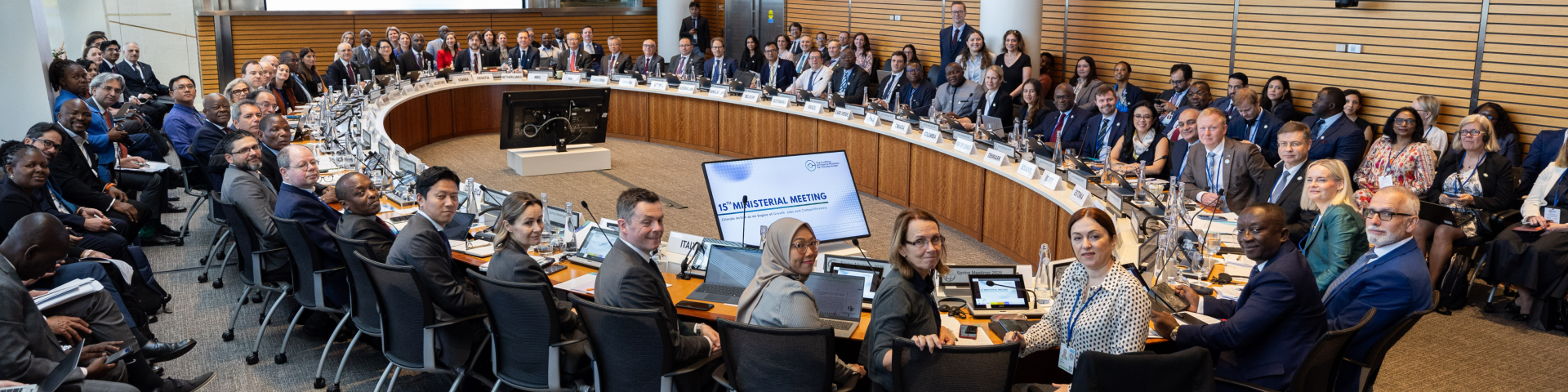
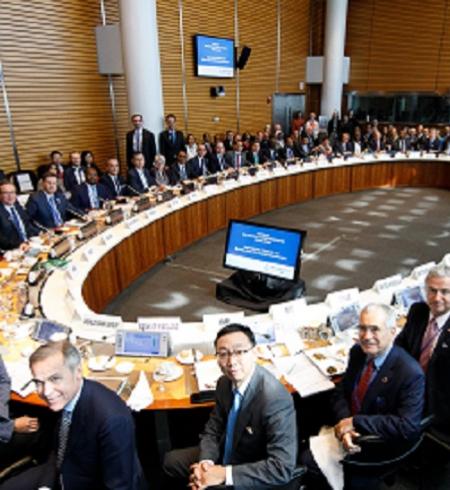
The Coalition of Finance Ministers for Climate Action met on February 1-2 in The Hague, the Netherlands. The Coalition offers a platform for ministers and ministries of Finance from 92 countries and several international organizations to discuss the financial aspects of climate change. Co-chairs Ralien Bekkers (the Netherlands) and Masyita Crystallin (Indonesia) sat down to discuss their goals and hopes for the meeting.
Bridging the gap between countries is part of the Coalition’s core. This is also reflected in its structure. Masyita: ‘The co-chair position by design is filled by one advanced economy, and one emerging or developing economy. Because countries come with different initial conditions, financial situations, emission accumulation, and overall stage of development.’ Countries take the position of co-chair for at least two years, with two possible one-year extensions. Indonesia will soon enter its final year; the Netherlands started as co-chair last year.
Honest conversation
The Coalition offers a platform for members to speak plainly. Masyita: ‘We have created a safe space for members to discuss things that are important for climate action but not yet implemented in their own country, or even are still politically sensitive.’ This puts the Coalition in a unique position. ‘We are not making formal decisions, but that also has a positive side’, Ralien adds. ‘Because it is not a formal process, there is room for honest conversation about what is actually working or not.’ She hopes these efforts will find their way into policy. ‘We would like to have more and more Ministers of Finance to take what’s discussed within the Coalition to a G20, to the COP, to other global fora – and of course to their own countries to advance implementation of actions on the ground.’
Peer network
But it is about more than just convening and speaking. Being able to call upon already proven ideas and ways of implementing climate action as ministries of Finance is an invaluable resource for members, despite the differences between countries. Ralien: ‘Policy instruments – practical implementation – are one of our key focuses as co-chairs. To collectively grow our understanding of what we can do in our own countries and how to do it. To achieve that, we are working to strengthen the peer network and facilitate the exchange of experiences through the Coalition.’
Growth
This year marks the fifth anniversary for the Coalition. In that time they have grown substantially, which provides both opportunities and challenges, Masyita states: ‘At the size we’re at right now, you run into the risk of becoming too big. You need a better mechanism to be able to hear everyone’s voice, so we really want to activate our members’ involvement in the Coalition.’ Ralien adds: ‘We want our members to become leaders and champions in their own regions, activating others. Our current chairmanship term will end in 2025, which coincides with an important UN Conference of Parties (COP) and a deadline for the next round of national climate plans. The Coalition advocates for ministries of finance to be more involved in those.’
Impact
There are, understandably, some that ask why the ministry of finance is involved in handling climate issues. Masyita: ‘Ministries of Finance are often outside of climate conversations. For example at the COP, Ministries of Finance are generally not part of the “parties” that represent their governments in the negotiations. But the involvement of our ministries helps move climate policy forward. This is part of why the Coalition was formed.’ The climate issues are also often so complex that they touch on many political and societal aspects. Ralien: ‘Climate is becoming part of our core business. It impacts fiscal affairs, it impacts costs; it impacts finance.’