















Read the Press Release: The Coalition of Finance Ministers for Climate Action to Strengthen its Work for a Sustainable and Green Recovery
HELSINKI, SANTIAGO and WASHINGTON, 10 July 2020 – In April 2019, the Coalition of Finance Ministers for Climate Action began its work by establishing the Helsinki Principles, with the objective of mainstreaming climate in Finance Ministries’ work. In December 2019, the Coalition released the Santiago Action Plan to define concrete actions in all fields of Helsinki Principles. In just one year, the Coalition has united 52 Finance Ministries and gathered a large group of international financial institutions, multilateral organisations and partnerships.
Since the last Ministerial meeting in December, the Coalition has worked in all areas of Helsinki Principles. Following the breakout of the COVID-19 crisis, and the move to a virtual working format in March, the Coalition intensified efforts significantly. A series of meetings at the level of Sherpas were convened and workshops carried out in key work areas covering green budgeting, carbon pricing, public financial management, financial disclosure, financial preparedness against disasters, green taxonomies, and blended finance (more information available on the Coalition website).
The Coalition is releasing today the following three reports, prepared on the basis of some members’ experiences and analytical support of institutional partners. Such works will be used to advance and inform alternative of work of the Coalition:
- Report on ‘Better Recovery, Better World: Resetting climate action in the aftermath of the COVID-19 pandemic’ provides inputs about different policy options in the field of economic and financial policies. The aim of the work is to support Finance Ministries to obtain net benefits from a green recovery that is inclusive, resilient, and lower in carbon emissions. The work was motivated by the general uncertainty about the implications of the pandemic on climate policies in the deteriorated economic and fiscal circumstances caused by the COVID-19 outbreak. The central message of this report is the need to reflect on comprehensive recovery and stimulus packages that can help restore the path of economic and social progress, while also securing a safer climate in the context of a major economic downturn. Finance Ministers may need to design and introduce longer time horizon policy strategies to restore confidence and drive green investments. In this context, all areas of the Helsinki Principles are relevant.
- Report on ‘Long-Term Strategies for Climate Change – A Review of Country Cases’ showcases the experiences of a selection of member countries representing different levels of development and climate challenges. The report reviews different country approaches for the construction of long-term strategies to address climate change. Such comparisons provide useful information about the objectives, approaches, challenges and governance of preparatory work. The report concludes that the choices on the best policy instruments are complicated due to fast-changing technologies, the wide range of possible policy options and the need for strong political buy-in. Thorough impact assessments, cooperation with the various stakeholders and clear monitoring and governance structures seem essential in the process too. For developing countries, the inclusion of adaptation and resilience issues is also crucial to complete the policy picture. The work provides a good basis for deepening analysis and broadening examination to other countries and regions with different characteristics.
- Report on ‘Ministries of Finance and Nationally Determined Contributions – Stepping Up for Climate Action’ highlights the essential role of Ministries of Finance in climate action and explores avenues for Ministries of Finance to engage in the preparation, update, and implementation of NDCs. The case studies show that Ministries of Finance are contributing to the costing, macroeconomic and macro-fiscal assessments, and the mainstreaming of NDCs into public financial management systems. The report also shows that countries have used multiple entry points and are building on existing capacities to gradually bring climate to the core of economic and financial decisions. To achieve faster progress, public finance systems and economic policy tools, including macro-modelling and fiscal planning, should be improved to better capture climate aspects and integrate them in the designing of long-term strategies, in tandem with the work under NDCs.
All three reports complement each other. Finance ministers are increasingly playing a substantive role in responding to the challenges of climate change and designing strategies that are compatible with economic policy realities. The economic fallout from the COVID-19 crisis has forced a comprehensive strategic approach, linking short- and medium-term recovery efforts with longer-term sustainable growth, by signaling future policy directions. Understanding the effect on macroeconomic stability and fiscal constraints is key to dealing financially with climate change, by selecting the right combination of tools and policies at countries’ disposal. Each country’s individual path to a low-carbon, climate resilient society will look different depending on its own unique characteristics, available technical solutions and economic and social structures.
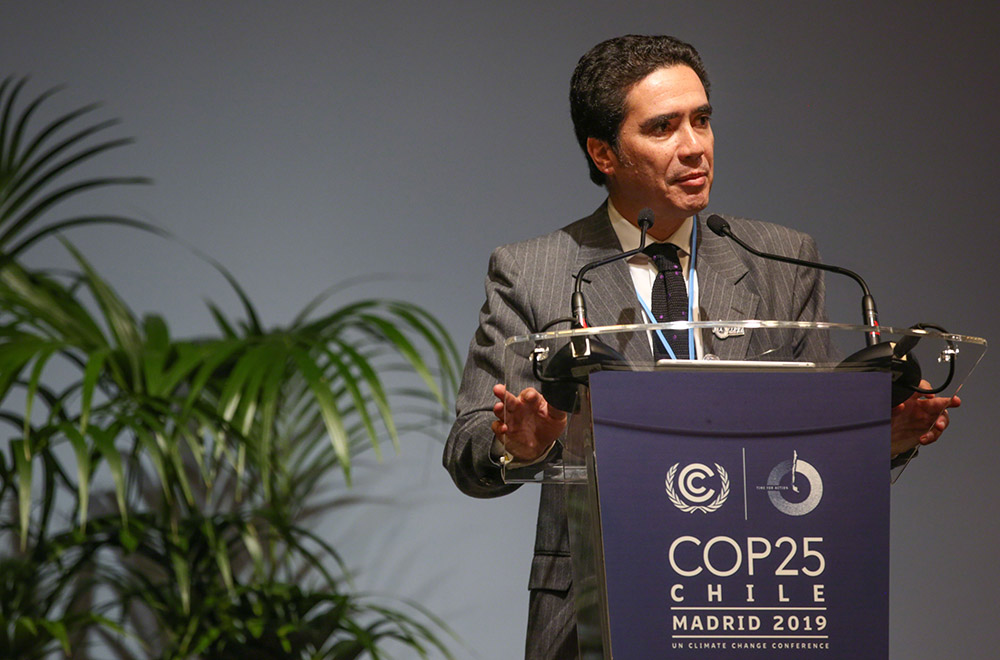
"While we continue to concentrate our efforts on mitigating the effects of the pandemic on households and firms, we must also prepare for the recovery that follows. Work by the Coalition and its institutional partners provides concrete policy options towards integrating climate action in the recovery to come.” Quote from Finance Minister Ignacio Briones, Chile, Co-Chair of the Coalition of Finance Ministers for Climate Action
“These reports underline the importance of long-term strategies and horizontal approaches in designing climate policies. The Coalition of Finance Ministers has started to deliver useful policy considerations. This reflects the enhanced involvement of Finance Ministers in addressing climate change. I look forward to discussing the priorities with my colleagues in October.” Quote from Finance Minister Matti Vanhanen, Finland, Co-Chair of the Coalition of Finance Ministers for Climate Action
Finance ministers will discuss these reports in October 14 based on further preparatory work. Ministers will provide policy guidance on mainstreaming climate issues in economic and financial policies, as well as on the implications of COVID-19 in the recovery packages and climate policies. In that context, the Coalition will also define further work priorities for period 2020-2021 and strengthen its governance arrangements.
About the Coalition of Finance Ministers for Climate Action:
The Coalition, launched in April 2019, is a group of Finance Ministries that work on a voluntary basis, to share experiences and best practices to integrate climate change in the economic and financial policies. The Coalition currently brings together 52 countries from all regions, each representing different levels of development and climate change challenge. Member countries represent about 16 percent of global CO2 emissions and 30 percent of global GDP (2017).
Further information about the Coalition is available at: www.financeministersforclimate.org
Inquiries:
Co-chairs of Sherpas, Coalition of Finance Ministers for Climate Action
Pekka Morén, Ministry of Finance, Finland
pekka.moren@vm.fi
Lorena Palomo, Ministry of Finance, Chile
lpalomo@hacienda.gov.cl